The Art of the Title Sequence

Single Take Titles, Part 3: Steadicam’s Long Take

“The Steadicam is a combination of several large pieces of equipment, worn on the operator’s body that support the camera. The design of the equipment allows for the operator to walk and move about, without translating his or her footsteps or other vibrations into the lens, and subsequently the shot.” – Steadishots.org

A jitter-free alternative to expensive and laborious tracking platforms, the Steadicam “revolutionizes the ways films are shot” (Stanley Kubrick). The apparatus’ XYZ axis of motion is an easily rotated flotation device for the director’s vision. It is reliant upon the camera operator’s athletic grace and sense of composition. It is a visual language.

Our thanks to Afton Grant, a Steadicam owner and operator from New York, who’s excellent Steadishots website was an invaluable resource in the creation of Single Take Titles, Part 3, and who’s commentary highlights each film here.

After Hours contact sheet
Click to Watch SD
| iPod/iPhone

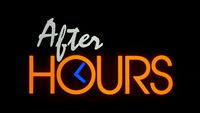
AFTER HOURS

A synthy clarion bell beckons a plaster-dusted (but alive) Griffin Dunne’s “Paul Hackett” in Martin Scorsese’s “After Hours.” Note Hackett’s elevator door-reveal of an expression that Robert Downey Jr. has come to own over the years. With Mozart elevating the sequence the camera’s movement casts a damning eye upon the worker hive. The film is a Kafkaesque (thank you kindly, Mr. Roger Ebert) salve; Paramount had just canceled Scorsese’s The Last Temptation of Christ.

S p o i l e r : Back at the office but ultimately missing from his desk Dunne’s “Paul Hackett” goes missing in a familiar place. Again.

Afton Grant from Steadishots:

“This is a very fun little shot, though not simple in any way. Done in low mode, at a relatively quick pace, this shot displays the great importance of good dynamic balance. With the fast paced pans and turns around the set, if the sled had not been balanced properly, it would have rolled very dramatically with each turn.”

USA | 1985 | Color | 1.85:1 | English | DVD

Extras

Image Extra iconThe pulsating, exploratory music that plays over Hackett reminds us of the Chemical Brother’s track “Flashback” which, in turn, reminds us of the opening sequence to Doctor Who.

Audio clip: Adobe Flash Player (version 9 or above) is required to play this audio clip. Download the latest version here. You also need to have JavaScript enabled in your browser.

SHOT DETAILS

Operator: Larry McConkey
Length of Shot: 01:03
Shot Elements: Low-mode

Bonfire of the Vanities contact sheet
Click to Watch SD
| iPod/iPhone

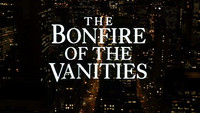
THE BONFIRE OF THE VANITIES

After a time lapse shot for the ages an air of inebriated whimsy ushers us along with the Bruce Willis character.

Afton Grant from Steadishots:

“This would be one of the more famous opening sequences in the world of Steadicam. An almost 5 minute take, executed to near perfection. McConkey’s skill can really be seen in the final few seconds of the shot where the motion slows way down and ends in a lock-off with perfect headroom, horizon, and no wiggle.”

Commentary with Steadicam Operator Larry McConkey:

“I fell on the very first take, due to the introduction of an ice sculpture that extras were wheeling in front of the camera for the first time on the take. Up until then they had rehearsed with an empty cart to save the ice from melting. The extra weight slowed them up considerably. I was following the actors into the underground garage and I had choreographed the ice sculpture to wipe through frame between the actors and me before after which I planned to race in front of the group in time to back through a narrow doorway.

Unfortunately there was an army of people trailing me who had to then race around and precede me through that doorway (Brian, Vilmos, AD’s, sound, my assistant, etc.) and there really wasn’t enough time. Someone tripped my AC, Larry Huston, who graciously offered his body for me to fall on top of. I was completely unharmed, as was the rig, but Larry H. had a nasty gash in his head. He refused a ride to the hospital so we could continue to work, and the nurse reopened his wound after every take to keep it from healing improperly until he could get stitches. What a trooper!!

Brian, who is a master tactician and strategist just hadn’t considered this possibility: he stood over me, and after seeing I was OK said “I didn’t think you could fall!” He had anticipated every potential disaster but this one. We did another 11 takes until dawn when Vilmos informed me that this last take “must be the one!!! The light at the beginning and end were perfect, and that WAS the one.

Each take was a full 500′ and the shot was over when the end of the film flapped through the gate.

I wanted a device to let Bruce pass by me a little too close to the camera for focus in the elevator, and he came up with the idea of scooping up some salmon mousse, and twirling a little drunkenly past me. This also delayed the action enough for the rest of the crew (same group as before except for Larry H. and the boom woman with a wireless boom mike who rode with me) to exit the elevator next to us. They were timing their elevator to synchronize with ours on the way up to maintain a good RF link to the mixer. If the elevators rose side by side it worked fine, otherwise complete dropout.

After exiting, I wanted to get back in front of Bruce so he came up with the Mousse Toss onto the wall thereby backing away from the camera enough to allow me to make a clean exit. There were many other devices like this throughout that I came up with to make the shot flow… I figure the more work everyone else does, and the less work I have to do, the better it will look…

USA | 1990 | Color | 1.85:1 | English | DVD

SHOT DETAILS

Operator: Larry McConkey
Length of Shot: 04:58
Shot Elements: Long Shot

Snake Eyes contact sheet
Click to Watch SD
| iPod/iPhone

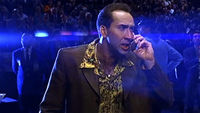
SNAKE EYES

Here comes the pain.

Feeding off Nic Cage’s dickish-but-funny vapors the opening sequence to Brian De Palma’s Snake Eyes impresses as bits of narrative register and bullets fly. The sequence plays continuous but reportedly has eight cuts. Where are they?

Afton Grant from Steadishots:

“The full opening sequence continues for almost 13 minutes but the first 7 minutes contain the best examples of the Steadicam work by McConkey. Within the full 13 minutes, there are 8 well hidden cuts, mostly in either whip pans or something crossing full frame.

This shot, and the sequence as a whole, are excellent examples of a director’s vision, and understanding of the tool. Add to that vision, a great amount of trust and collaborative respect for an operator, and you get a shot that people talk about for years to come.”

USA | 1998 | Color | 2.35:1 | English | DVD

SHOT DETAILS

Operator: Larry McConkey
Length of Shot: 13:00
Shot Elements: Long shot, Stairs, Escalators, Dutch Roll, Whip Pans

Boogie Nights contact sheet
Click to Watch
| Click to Watch HD | iPod/iPhone

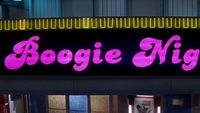
BOOGIE NIGHTS

After what can be described as an Balkan sounding prelude over black pops practical bubble gum type. “Doesn’t take much to make me happy.” The camera swoops like Burt Reynolds eyebrows and rolls like Heather Graham bringing us into the club making introductions.

Afton Grant from Steadishots:

“An amazing opening sequence. Starting on a crane, moving through a couple dutch rolls and tilts down to the ground, entering the club, and tracking the action for nearly 3 minutes.”

USA | 1997 | Color | 2.35:1 | English | DVD

SHOT DETAILS

Operator: Andy Shuttleworth
Length of Shot: 02:56
Shot Elements: Crane step-off, Dutch rolls, long shot

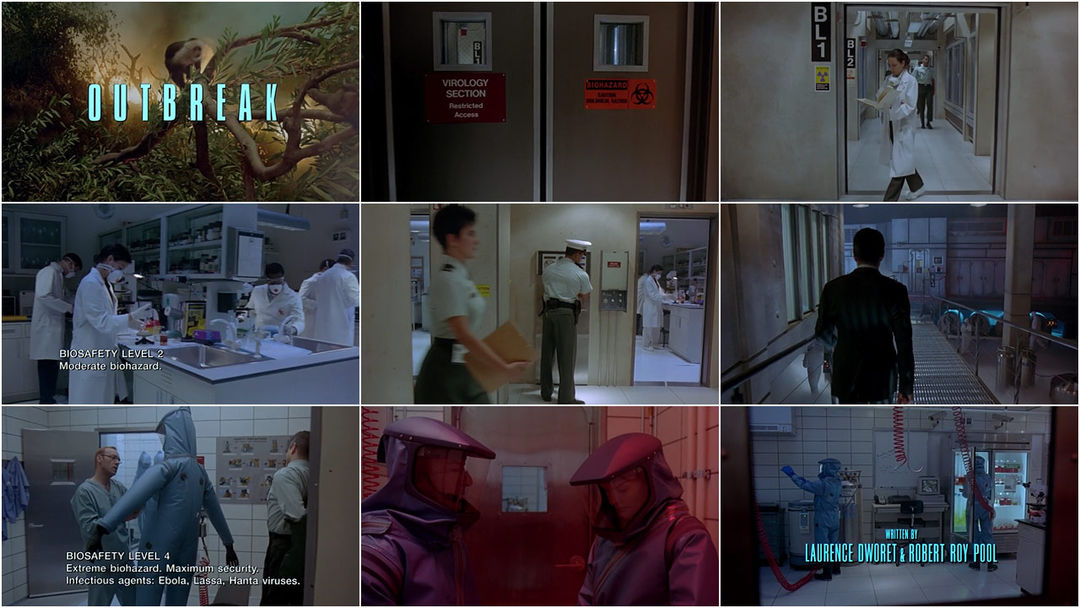
Outbreak contact sheet
Click to Watch SD
| Click to Watch HD | iPod/iPhone

OUTBREAK

As we skirt a declared national emergency in H1N1 let us consider Wolfgang Petersen’s employment of the long take title sequence in Outbreak; touring the military’s Medical Research Institute of Infectious Diseases, specifically the various “biosaftey levels” of the Virology Section (from Salmonella to Hanta to the reassuringly-described “unknown”) in a single take grounds us in discomfort.

Afton Grant from Steadishots:

“This is an excellent opening POV sequence. Such a long opener requires an incredible amount of coordination. Take note of the many cues and actions that move the camera in and out of the rooms and hallways.”

USA | 1995 | Color | 1.85:1 | English/Korean | DVD/Blu-ray

SHOT DETAILS

Operator: Mark Emery Moore
Length of Shot: 02:59
Shot Elements: Long Shot, Oner, Stairs

Serenity contact sheet
Click to Watch SD
| Click to Watch HD | iPod/iPhone

SERENITY

The continuous appeal of Joss Whedon’s characters on the raggedy edge is on parade to begin the title sequence of Serenity, his film based on his Firefly franchise.

Afton Grant from Steadishots:

“An excellent single shot in a movie that, unfortunately did not get a lot of attention. This opening sequence is fantastic. The set is a large part of a spacecraft and the camera goes all through it – upstairs, down corridors, through doorways and more.

If you watch closely, slight zooms are used to close and retreat larger distances without forcing the camera operator to break into a run, or crowd the actors, or backpedal quickly.”

USA | 2005 | Color | 2.35:1 | English/Mandarin | DVD/Blu-ray

SHOT DETAILS

Operator: Mark Emery Moore
Length of Shot: 02:59
Shot Elements: Long Shot, Oner, Stairs

Durval Discos contact sheet
Click to Watch SD
| iPod/iPhone

DURVAL DISCOS

When Art of the Title watches a fluid steadicam composition what takes place is a kind of sustenance.

Filmed at Rua Teodoro Sampaio, famous in São Paulo (Brazil) for its concentration of shops selling musical instruments, the opening sequence to Anna Muylaert’s film “Durval Discos” is organic in its ease as DP Jacob Solitrenick treats us to the relaxed pathology of the street.

At once you figure the arrangement and mute any notion of it, allowing the credits to simply come when they come. We are somehow reminded of a certain conversation Robert Duvall had with Sean Penn in “Colors.” Duvall Discos!

Full Post: Durval Discos

Brazil | 2002 | Color | 2.35:1 | Portuguese | DVD

SHOT DETAILS

Operator: Marco Túlio Guglielmone
Length of Shot: 03:33
Shot Elements: Crane step-off, Long Shot

Bookmark and Share

Category: Feature, Single Take Titles

Tagged: , , , , , , , ,

  • In the discussion of _Snake Eyes_ we should also note the last shot in the film, which is on the boardwalk and slowly zooms in to the wall with the ring embedded, which ALSO lasts 13 minutes, going on as the credits roll. A great set of bookends to the film, and the last one is much less flashy, is unnoticed since 95% of the audience is walking out, and indeed, _is_ in one cut without trick edits.

    Cheers, Roger
  • Sebastian
    I really enjoyed the 3-part blog of the single take. There is one, I think, is the mother of all single take tracking shots that wasn't mentioned. "Goodfellas". It was one of the first times that a Steadicam was used to track a long shot sequence like that in a film. I just feel like it was worth mentioning. I do recognize that the article is about title sequences. The sequence I am mentioning doesn't happen until approximately 20 minutes into the film.
  • How about "The Russian Ark?" It had a steadicam shot that went well beyond the opening sequence - the whole film was one single steadicam shot.

    For those wondering, it was shot on HD and recorded on a hard drive. Despite it's subject (history of Russian art) and lack of appeal for American audiences, I think that it is one of the most amazing shots in the history of cinema. It certainly qualifies as the most rigorous steadicam shot ever - a real marathon. The operator walked for over a mile through hallways, up and down staircases, walked outside, and then back inside. The final shot was completed on the third take after two aborted takes. They only had time and light for one last attempt. Talk about pressure and stamina.

    Even if the subject doesn't engage everyone, every director, DP, and operator should see the film and marvel at the accomplishment - the planning, staging, and blocking are nearly flawless. Lots of details on the DVD extras.
  • Outbreak has a crafty cut in too.. on the guy we follow into the ultra security area. Nice article though, I love steadicam work
  • daniel c w
    Serinity's title sequence may be a one piece, but it has one cut, and very likely was 2 shots.
    The ship was built on 2 stages, one for the upper deck, one for the lower.
    When the Captain walks down the stairs, a cut is visible, if you know, what you have to look for.
  • John Brune
    Yes this is mentioned in the commentary track on the DVD. The cut is invisible and you would only know it's there if someone told you--like Joss Whedon.
blog comments powered by Disqus

Interviews

Gareth Smith on Up in the Air
Krystian Morgan on The Thing³
Johnny Kelly on Het Klokhuis
ISO Design on A History of Scotland
Danny Yount on Sherlock Holmes
Gareth Edwards on How We Built Britain
Yellowshed on Cloudy with a Chance of Meatballs
Chic & Artistic on Dan Black's “Symphonies”
Nirvan Mullick on Willard
Sfaustina on Tetro
Kevin Dart, Stephane Coedel and Cyrille Marchesseau on A Kiss From Tokyo
Matteo Manzini on Chéri
Jim Capobianco and Alexander Woo on WALL·E
Edd Kargin on Novaya Zemlya
David Daniels on Freaked
Kyle Cooper on The Incredible Hulk
Garson Yu on Hulk
Zephyr on Wild Style
Howard Nourmand on The Dog Problem
Nina Paley on Sita Sings the Blues
Stephane Coedel on The Amazing Adventures of Kid Cole & Klay
Stefan Bucher on The Fall

Advertising

Browse

Latest Updates via Twitter

Twitter Updates

    follow us on Twitter

    Master Index

    © 2010 The Art of the Title Sequence. All other names and trademarks appearing on ArtoftheTitle.com are the property of their respective owners.