The Art of the Title Sequence

Blue Valentine

"Tell me how I should be. Just tell me. I'll do it." - Dean

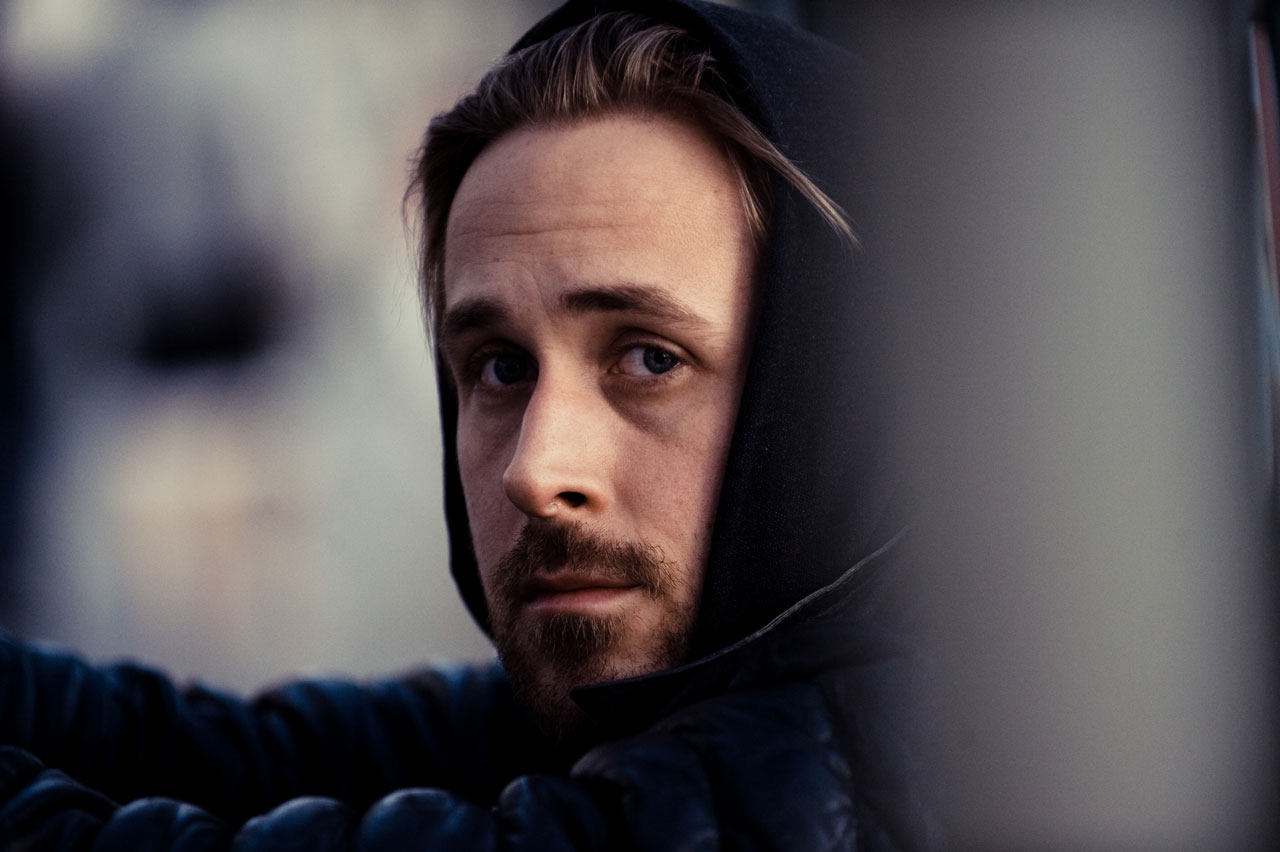
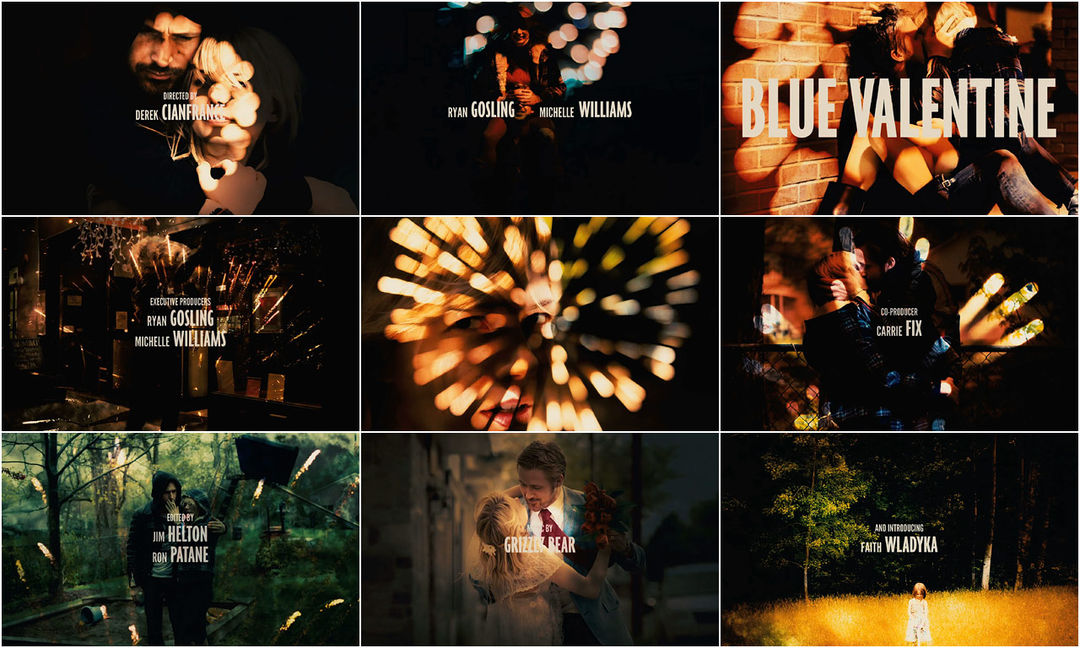
Jim Helton and Charles Christopher Rubino's end credits for Derek Cianfrance's Blue Valentine is a last look of what was and what will not be.

In a managed duality of the intimate and the expansive, a hypnotic racked bokeh of celestial colors spreads across the night sky with Grizzly Bear's "Alligator" conducting the atmospherics, elevating the experience of the film to something glorious.

The title sequence taken with the trailer (below for your viewing pleasure) reminds us of this following scene from one of the greatest films of all time, "A Thousand Clowns."

INTERVIEW
Jim Helton, the film's editor (alongside Ron Patane) and end title designer, details the process for us.

Jim Helton: Let me first start off by saying that I have known Derek Cianfrance for a very long time. My friend Steve Hidinger and I actually created the title sequence for his first film, Brother Tied, back in 1998. That title sequence was all done on a dual gate 16mm optical printer at the University of Colorado in a closet inside a condemned archeology (that building no longer exists). We learned from a true master of that machine, experimental filmmaker Phil Solomon. He taught us about combining elemental and abstract images such as fire and water with more representational images through a process that he called bi-packing which involves placing two strips of film on top each other and re-photographing them which creates quite a different effect from a standard super-imposition. It is a tedious frame by frame process, but it can create pure magic. If you like the Blue Valentine title sequence, everything about it starts with Phil Solomon -check out his work. Solomon’s sound was also a huge influence; nostalgic, distant, reverberating.

Other giant inspirations for me that are a bit more obvious are Saul Bass and Maurice Binder as well as the Goldfinger titles by Robert Brownjohn. I collected their work as a college student and would sit around and watch them with my friends Joey Curtis (co-writer of Blue Valentine) and Derek Cianfrance. That was our idea of a party back then! That and some cheap Paisano wine, wonderful food, and long pink summer sunsets in Boulder.
The thing I loved about those filmmaker’s title sequences was their ability to tell an abstract story and embed images within abstractions. The abstractions seemed to create something less logical and more emotional or even poetic while at the same time leaving space for the titles (and even highlighting them). Those qualities are very central to the creation of the Blue Valentine title sequence.


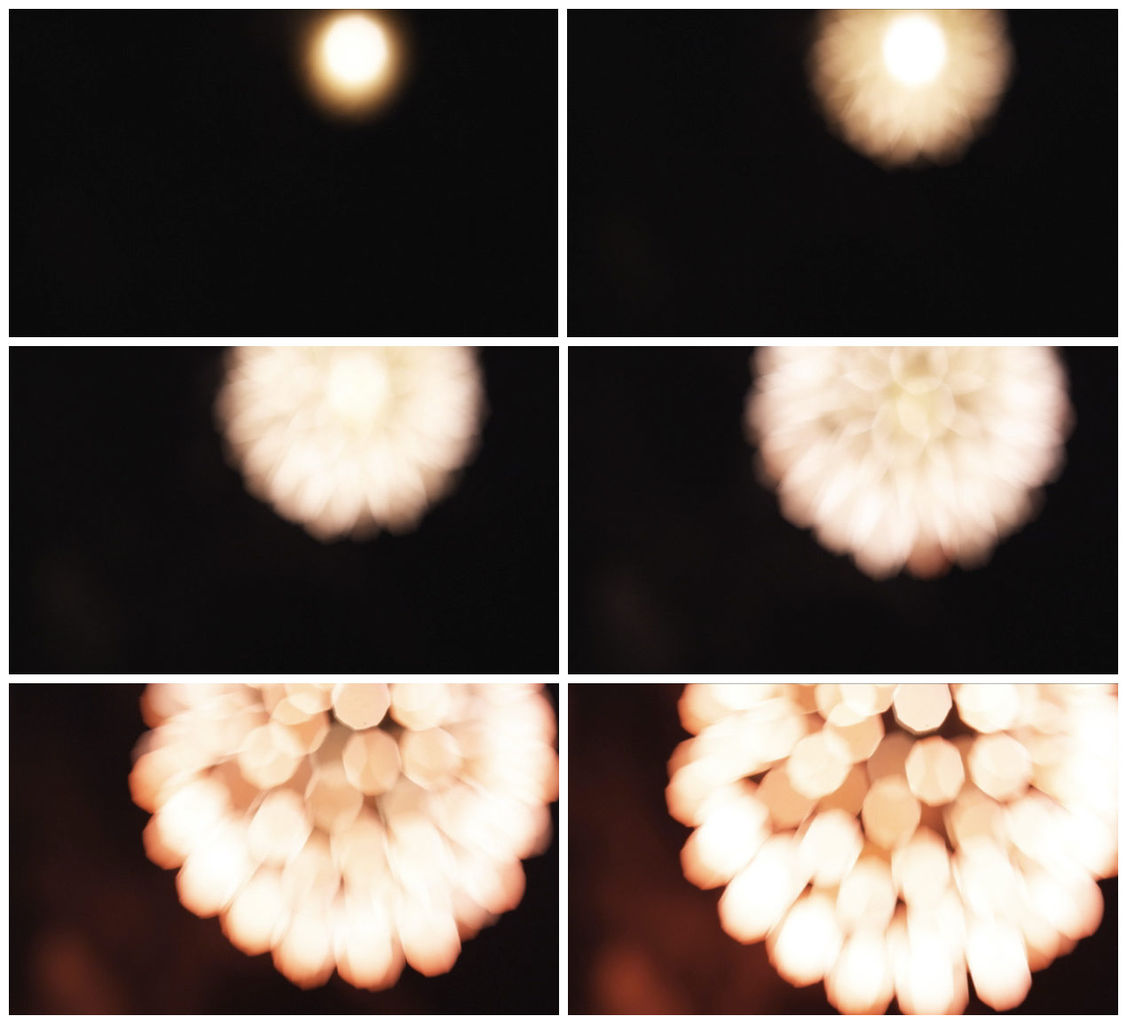
Fireworks frames 1 (Click to Enlarge)


I’ll start with the first layer - the fireworks. I was editing Blue Valentine alongside Ron Patane and we were just trying to get it done for screenings so we were very focused on the narrative flow of the film. However, on a late night or two, I made some room for abstraction and delved into Andrij Parekh’s beautiful fireworks footage and discovering rhythms in his camera work and the exploding light. He and Derek shot fireworks somewhere near Scranton, PA on July 4th of 2009... they threw images out of focus and sometimes even took the lens off. The film ends with a fireworks scene so it was always going to be fireworks. In the first rough cuts of the film it was just that, an abstract montage of fireworks. My first passes on that footage were all silent because I believe that if you can make something flow without music it will definitely flow with music and then you will actually have two pieces of “music” playing in harmony together.
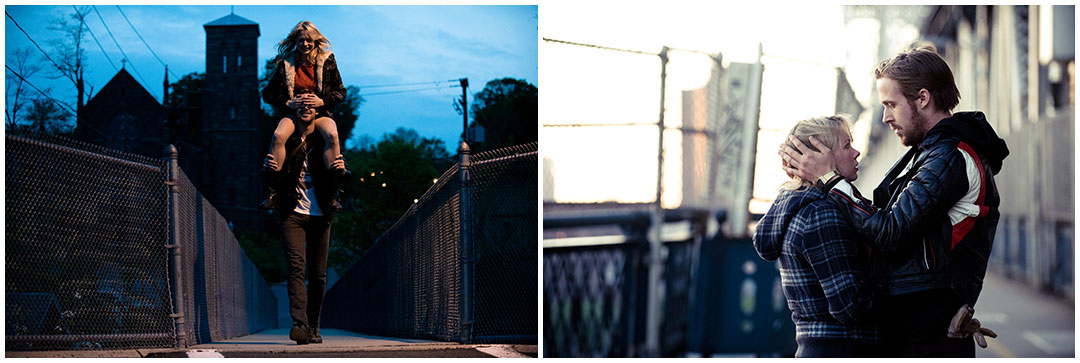

Davi Russo set photography (Click to Enlarge)


The second layer was the music by Grizzly Bear. The only parameters I was given in choosing the song is that it had to be by Grizzly Bear. I chose “Alligator” - what can I say? Everything about this song was right, from the tone to the lyrics to the cinematic quality it lends to the sequence; I love it. Of course, I could’ve been over-ruled by Derek in the song choice, but he loved it right away. Ironically, after the last day of shooting on the way back to New York, I rode in a car with Derek, Andrij, and still photographer Davi Russo. They told me that the final song should be a pop re-mix of “Two Weeks” and proceeded to play it very loud and drive very fast. Well...the “Two Weeks” re-mix is a good song, but to me was not right for the end of the film. I knew that then, but I bit my tongue because everyone was riding high after wrapping the shoot... sometimes it is better to show people rather than to argue with them.
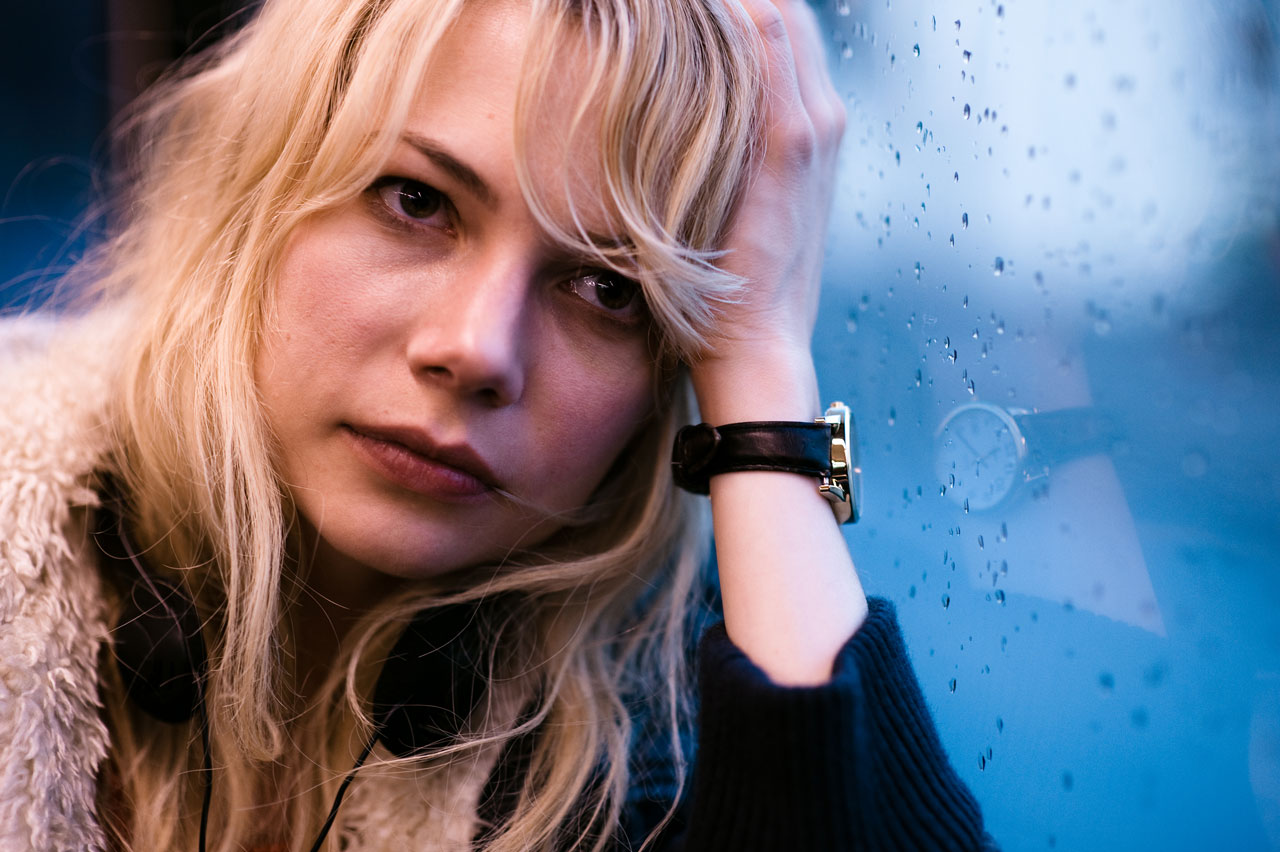

Davi Russo set photography (Click to Enlarge)


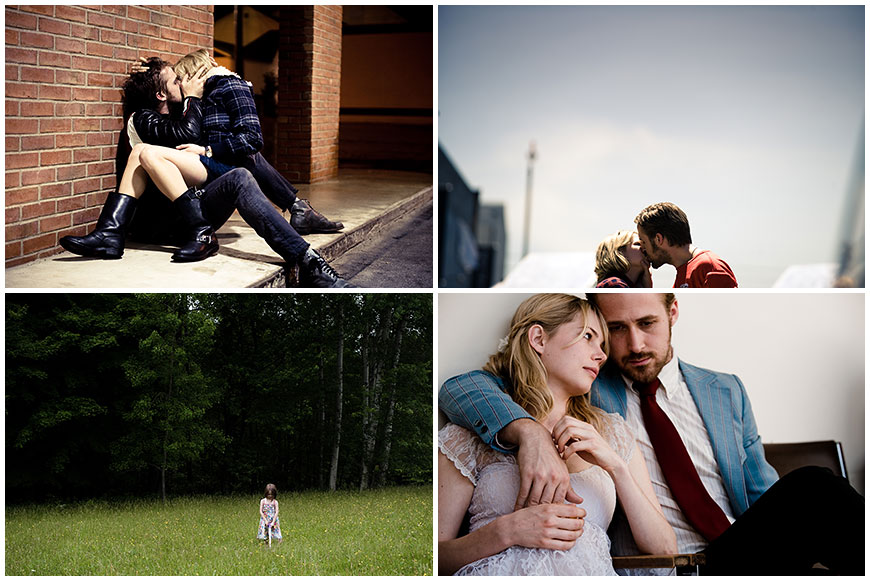
The third layer was the amazing iconic photography that Davi Russo (NSFW) captured on set. Derek and I have been working with Davi for a long time now - since 2004 - and his still photography played a huge role in the documentary work we made prior to Blue Valentine, so right from the beginning Derek insisted that Davi be involved in production. I believe this was not only for his photography, but also his presence on set. Derek greatly values Davi’s “bullshit meter” and his eye. For a long time in the edit, Derek and I asked each other, “where do the photos fit in?” It was not until the second or third rough cut screening that it hit me... I literally saw them inside of those fireworks - like memories. As these things usually happen, the ideas were in the ether because Derek and Cami Delavigne (co-writer of Blue Valentine) both walked up to me at separate times after the screening and said that something was missing in the end titles. Of course I had the idea in my mind, so I just grinned and said “I got it”.


Davi Russo set photography (Click to Enlarge)


The next night I stayed late and put the images “inside” the fireworks, I knew the images by heart and it happened very quickly because we had narrowed down our favorites. I wanted to create a sort of ode to the film, a story of togetherness, apartness, and love ending with the wedding and ultimately, Frankie alone in the field. I looked for images that fit within the firework explosions, re-framed images, and at times even cut them up into details. I also looked for the proper amount of negative space within the images to make the titles really pop out so the image and the title could share time together without conflict. This was all done in Final Cut Pro. Of course, we kicked it up a notch in the color correct with the help of Technicolor ace colorist Tim Stipan, but the original was all created in Final Cut Pro using the composite feature and a lot of tweaking. I honestly can’t tell you exactly what I did but I discovered these techniques by trying to mimic some of the things I had learned while using the optical printer in film school. You can see examples of this discovery and exploration in my own films.
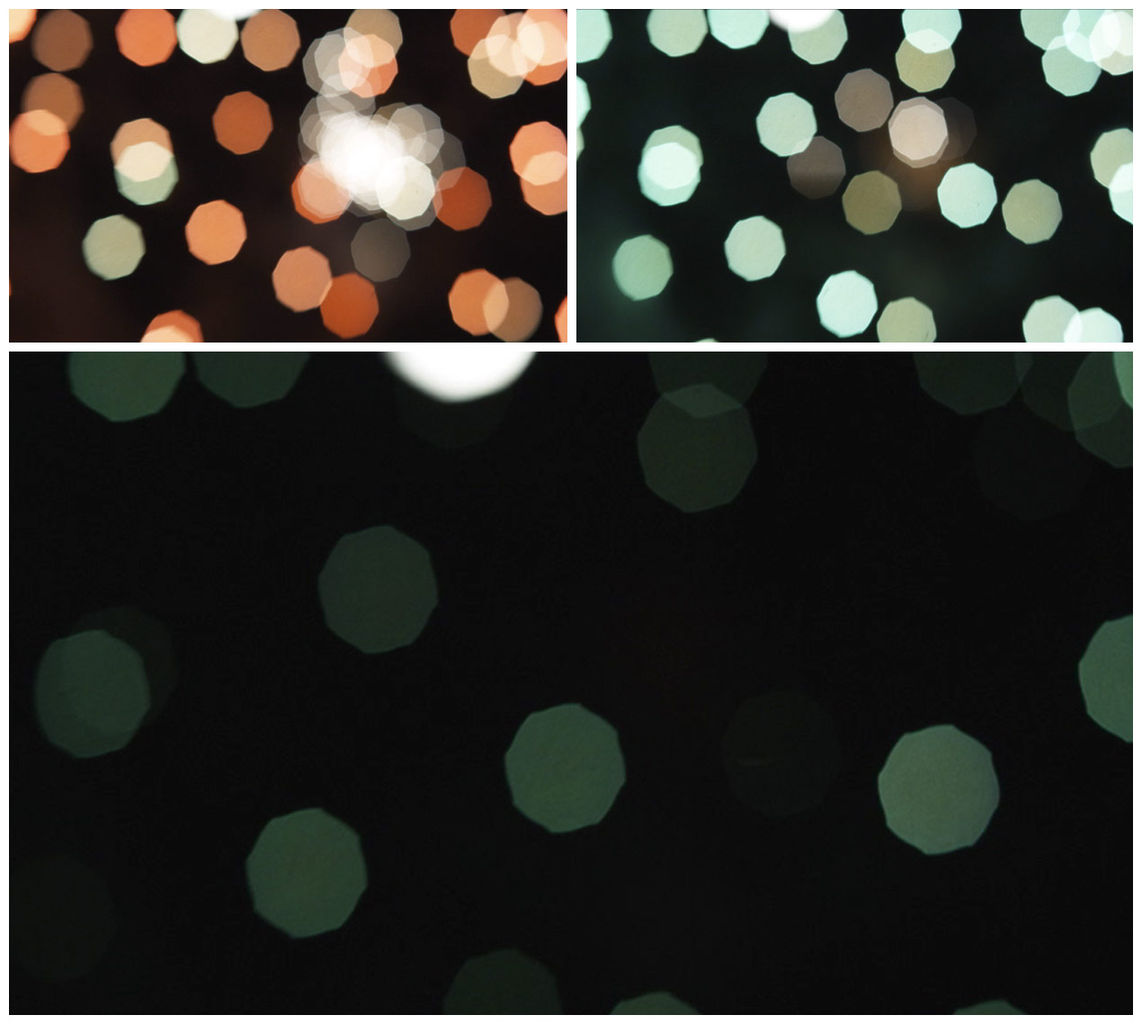
Fireworks frames 2 (Click to Enlarge)


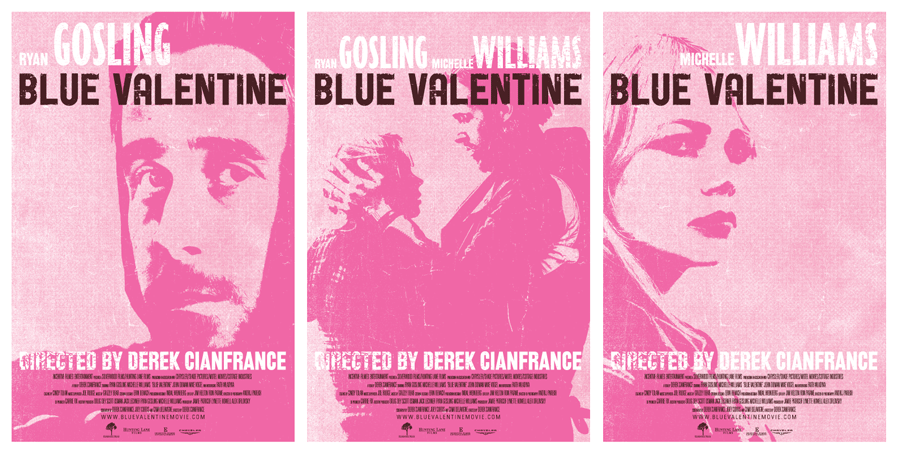
The fourth layer was the typeface created by artist and designer Chris Rubino. We went through a serious exploration of typeface - both curated and created by an amazing artist (of course, I am biased because Chris and I have collaborated on a film series called Love Kills Demons. His interpretation of words is inspiring. A variation of the typeface that Derek, Chris, and I settled on is also used in the screen-printed limited edition pink Blue Valentine posters that Chris created for the Sundance Film Festival in 2010. Derek loved what he called the “like a Russian film” character of the small and large fonts. I love the boldness of the main title. Incorporating them into the picture was pretty simple... short fade in and long fade out like exploding and disappearing light. The only title that straight cuts in is the main title, super bold with a long, long fade out.
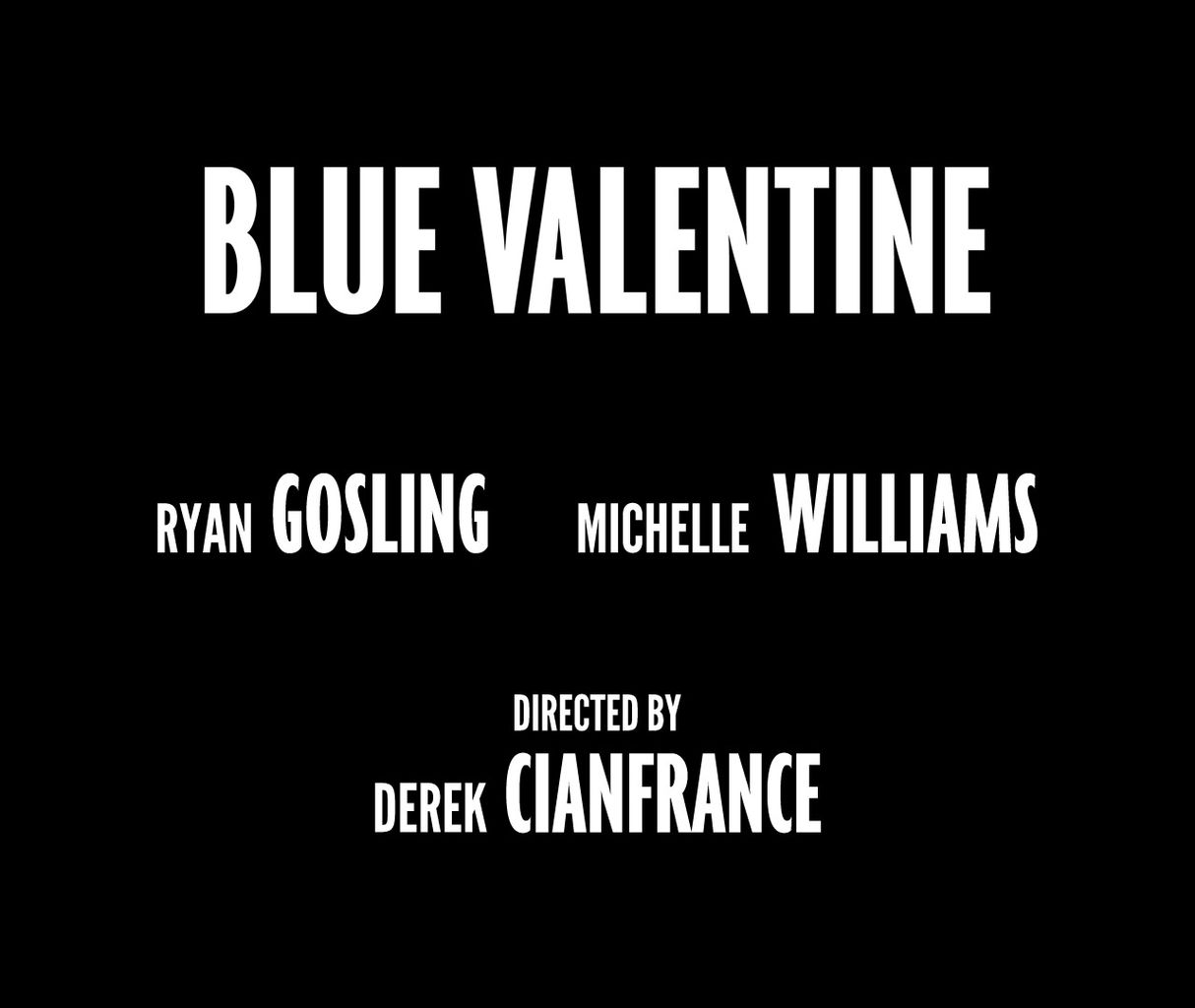

Custom typeface example (Click to Enlarge)


Limited edition pink Blue Valentine posters for Sundance (Click to Enlarge)


The fifth and final layer was the sound design created by Dan Flosdorf and mixed by Corey Melious over at Sound Lounge. Fireworks streaking into the sky and crackling in the distance, muted booms, children laughing, shouting, and screaming... they all help tie the title sequence to the last shot of the film and, in effect, create an interplay between the nostalgic past and the present that reflects the structure of the film itself. Dan recorded his own fireworks and what he calls “the air of the night” in surround sound and we layered them in so that they worked with the rhythm of the images and tone of the song - echoing and abstract, lost in nostalgia, sometimes slightly out of sync, sometimes absent and allowing the music to completely take over.

There you have it - a great collaboration between Derek, Andrij, Davi, Chris, Dan, Tim, Corey, and myself as well as some sources of inspiration. That’s kind of what this whole filmmaking thing is all about.
DETAILS


CREDITS

Title Sequence: Jim Helton
Title Design: Charles Christopher Rubino
Still Photography: Davi Russo
Cinematography: Andrij Parekh
Sound Design: Dan Flosdorf
Music: Grizzly Bear

RELATED MATERIALS

Blue Valentine trailer


LINKS

Jim Helton
Blue Valentine - Official site

Category: Film, Interviews, News

Tagged: , ,

  • http://twitter.com/nnes Hannes De Block

    Both the video’s and the music look/sound fantastic.
    Looking forward to this movie!

  • Catalin Brylla

    It was interesting to see how many close-ups (CUs) the film uses throughout. Connotatively, the change from CUs to wider shots in the latter third implies an awareness of the characters, both being able to see and accept the bigger picture, Ryan Gosling’s character’s realisation culminating in the long-take WS from behind at the very end.

    Anyway, apart from this metaphoric reading of the film’s creative use of cinematography, there is also a heightened visceral and perceptual shift (claustrophobic, abstract –> open, free, concrete), which is reminiscent to the fundamental principle of art (or arguably “life” in general): “Everything perceivable is perceived through its opposite.” (sorry for the clumsy translation from German). This quote by Johannes Itten, a German artist associated with the first period of the Bauhaus movement, is by no means the first discovery of this principle, but the first time someone applied it to art aesthetics and audience perception (I have the feeling that structuralist movements, such as semiotics, were directly inspired by Itten.)

    Another issue (or rather question) arising from the visual treatment in Blue Valentine is where visceral pleasure (in terms of reading, feeling and enjoying a film) ends, and where a physical uneasiness (unpleasant) starts. To divert a bit, Gregorie Currie (film cognitivist) talks about the “Simulation Hypothesis”, where the spectator feels something (fear, discomfort, disgust, love, hate, etc.), but these feelings are “offline”, i.e. detached from any perceptual inputs or behavioural response (after all, when we watch Roy Scheider preparing to kill the shark in Jaws, we do not literally feel the fear, the wetness, the seemingly hopeless situation or the urge to leave the cinema and buy a harpoon, despite the fact that we are emotionally and empathetically engaged; but only “off-line”).

    However, now and then we watch a film where our offline reactions are gradually changing into online reactions. E.g. in Hanecke’s “The Piano Teacher” or “Blair Witch Project” people reported acute nausea and disgust up to the point of leaving the cinema. “Avatar” reportedly created a mini mass-hysteria where people, after having watched the film, fell into a depression due to their (impossible) desire to be a Na’vi (in other words, they could not distinguish between their offline and online beliefs and desires). Coming back to Blue Valentine (and this might be just a subjective experience), I felt the constant CUs (which are maintained for two thirds of the film) created an eerie feeling, not only claustrophobic but also unsettling, which resulted in me being mentally agitated. After the first 5 minutes of the film I understood the meaning of the CUs, after 15 minutes I “felt” the meaning offline, but after a third of the film I responded to it, almost having the urge to leave the cinema for a short break and come back. Instead of offering any academic explanations, I just wanted to describe a phenomenon, which I have also noticed with other films (like the German film “The Experiment”), and I am very curious how other people perceived this film (or other films) from this angle. I am also curious if and how people experience this gradual perceptual shift in films that employ strong aesthetics in order to induce visceral and/or cognitive reactions into the viewer, i.e. first, intellectual understanding of what it means, then emotional understanding, then (if it continues) agitation or boredom.

    • http://www.facebook.com/people/Jim-Helton/773196893 Jim Helton

      Great comment Catalin. Imagine editing it! The “present” segments of the film are designed the way you are describing: shot telephoto on the RED camera, it was meant to create a physical reaction. The “past” segments used a wider angle fixed lens and were shot hand held on 16mm.

    • William

      Catalin, I think you’re right on, though the emotional and intellectual response may be swapped in their order depending on the filmmaking at hand and how engaging the performances are.

  • http://pleasewelcomeyourjudges.blogspot.com/ Brian Forte

    The credits were absolutely gorgeous. An excellent way to end the film.

  • http://xk9.com XK9

    The collaboration of Helton/Rubino’s design and Grizzly Bears music is simply gorgeous. Emotional resonance like this can’t be faked. Hats off to the photographer and whomever decided to put fireworks to use in the most beautiful way I’ve ever seen.

  • Trin

    What font is that?

    • http://www.facebook.com/people/Jim-Helton/773196893 Jim Helton

      It is a custom font based on a pre-existing typeface. I don’t know what that pre-existing typeface is but I will try to find out for you.

  • http://www.facebook.com/people/Elena-Salas/1127048151 Elena Salas

    Thank you! I have looking foward this for a long time.

  • William

    The moment the titles started in the cinema I was enthralled and had to see them again. Beautiful exclamation point to a beautiful film.

  • Borjatdl

    Hi Jim,

    I have seen you are reeding the posts so I want to take the opportunity to say two things:

    First of all, congratulations to you and the whole team for the beautiful, but most important, meaningful end credits sequence. I was fully in shock when the movie ended and the credits caused me some kind of relief and infinite sadness at the same time. I don´t know if this was the intention but was my experience and was very good indeed.

    Second, and this is very naive, but who cares! If you keep any contact with the two main actors of the movie, please, pass on them my profound gratitude and sincere congrats for give us two of the most honest, fearless, transparent and humble performances that I have seen in a long time. It is great to see that there are actors with star system potential (as they are) that are committed to this kind of projects. As a big follower of Michelle´s career from the very beginning (she catch my attention in Species…), is a real pleasure for me to see her recognized as the great actress she actually is. The same for Ryan Gosling, probably the best of his generation.

    P.S. Sorry for my rude English, I´m from Spain.

    • http://www.facebook.com/people/Jim-Helton/773196893 Jim Helton

      Thanks Borjatdl!
      I am glad that the title sequence had that effect for you, that is great.
      I hope to see Ryan and Michelle in the future and I will pass on your compliments.

  • ufoclub1977

    Is there an article about how this trend of putting the title sequence at the END of a movie came to be? The first movieI noticed this trend on was “The Mummy” in 1999. It’s such an odd trend that developed, and I originally thought that it was just a creative decision on that movie to not use the elaborately produced title sequence in the opening, but that since the investment and product was already delivered, they chose to just run it at the end.

  • Kye

    This movie is amazing! Wonderful and deeply emotional performances by Ryan Gossling & Michelle Williams. I think they both should have won awards for their performances. The film is very poetic and the cinematography is lush and vivid. See this film!

  • http://jasoncuthbert.blogspot.com Jason

    The aggressive guitars and the colorful comic book look of the images do two things for me – make me want to see “Machete” again and make me long for Robert Rodriguez to give us “Sin City 2″ already (please, Pretty, please).

  • http://bruan.tumblr.com Bbbb

    Hi Jim, wonderful insight into the creative process of these credits, a truly beautiful film all together, all your hard work and long nights and days have paid off :)

  • Yunus Shariff

    Your work is outrageously fabulous!!!! The visuals are stunning. As you have described here, I am sure this must have been put together painstakingly, but all those technicals aside, if any one were to ask me the audio-visual definition of the word ‘love’, I would play the end credits of Blue Valentine for them.

    Keep up the great work!

  • Annie

    i’ve always loved cinematography but the ending of this film has kind of influenced my career decision. i absolutely love this film. not just for the visuals but the story is bloody amazing. i hope one day to do visuals like in this film. spine tingling art.

  • http://twitter.com/nerdismus Nils Riedemann

    Sorry to be OT… i really want to find that leather jacket dean is wearing… any hints?! 

  • Alexandra Ostasheva

    wonderful! Big thanks)

  • Sagalyusuf

    what software was used to create fireworks in the beginning of the movie?? was it Adobe after effects?

    • http://www.artofthetitle.com/ Art of the Title

      No software involved, that’s real footage.

  • http://profiles.google.com/ayansarkar007 Ayan Sarkar

    What software was used to create the effects?

    • http://www.artofthetitle.com/ Art of the Title

      Just Final Cut Pro.

      • http://profiles.google.com/ayansarkar007 Ayan Sarkar

        Thanks. Do you know any other software that can do something similar to this for Windows? Bytheway, is there any specific name for those effects?

Advertisement

Categories

Master Index

© 2011 The Art of the Title Sequence. All other names and trademarks appearing on ArtoftheTitle.com are the property of their respective owners.